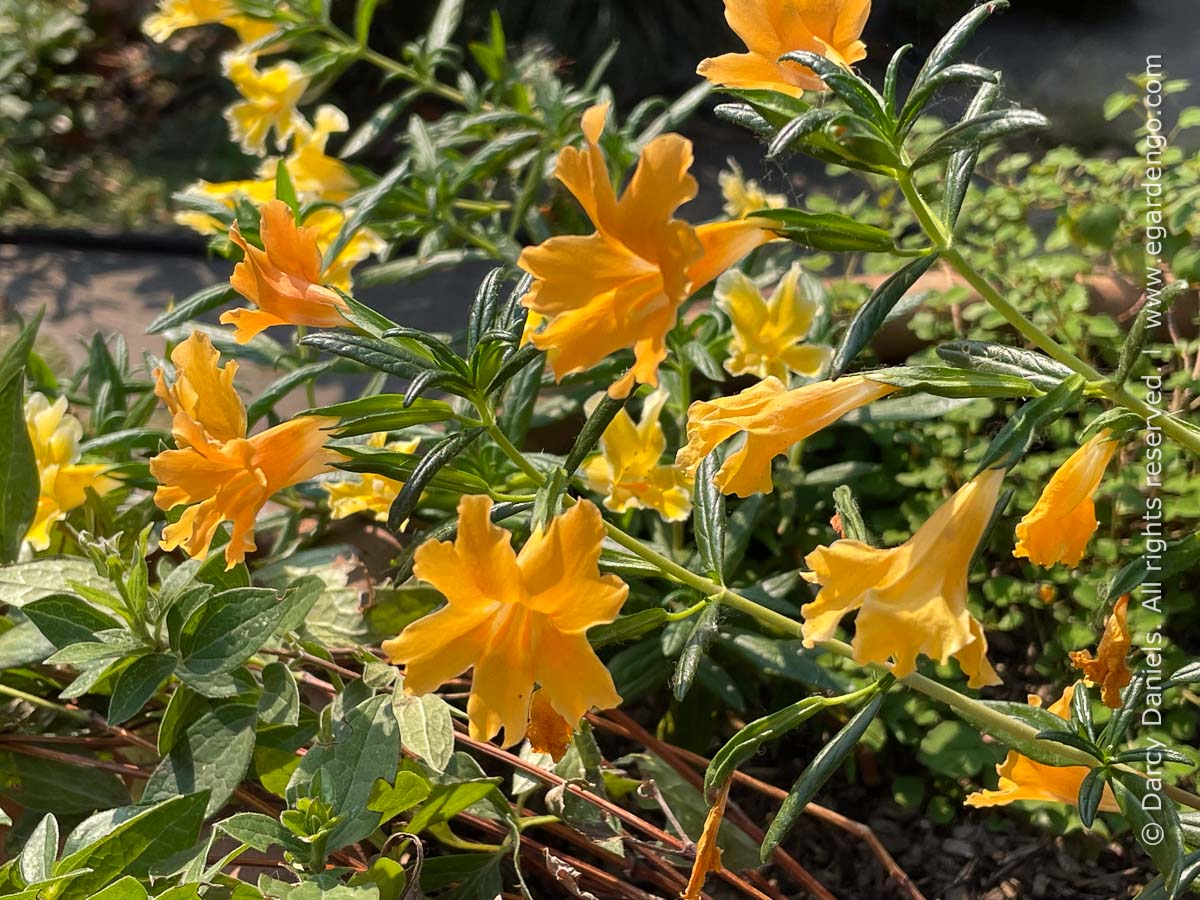
Mimulus aurantiacus

Bush Monkeyflower, Sticky Monkey Flower

Diplacus aurantiacus

Evergreen, Semi-evergreen Perennial

Also known as Sticky Monkey Flower or Diplacus aurantiacus, this California and Southern Oregon native brings bold color and dependable performance to low-water gardens. Its vibrant orange, tubular blooms show off from spring into summer and attract hummingbirds, bees, and butterflies—including the larvae of checkerspot and buckeye species.

This semi-evergreen shrub forms a tidy mound about 2 to 4 feet tall and wide. The deep green, lance-shaped leaves are sticky to the touch—a trait that inspired the name “Sticky Monkey Flower.” It thrives in a range of conditions, as long as the soil drains well.

Growing Notes:
Sunlight: Full sun near the coast; partial shade inland, especially in hot afternoons
Water: Low water needs; drought-tolerant once established
Soil: Requires well-drained soil
Hardiness: Tolerates down to 15°F (-9°C)
Wildlife: Pollinator attractor and larval host plant
Maintenance: Deadhead to extend bloom time

Garden Uses:
– Ideal for borders, rock gardens, and native plant landscapes
– Perfect for coastal and water-wise settings
– Pairs well with other California and Pacific Northwest natives

This plant thrives on sunlight, lean soil, and a bit of neglect. Just give it room to shine, and it will reward you with color, structure, and ecological function.

Growing Conditions

Zone: 7, 8, 9, 10

Exposure: Full Sun, Part Sun, Afternoon Sun, Morning Sun

Water Needs: Drought-tolerant, Average, Low, Occasional, Regular / Even

Soil: Well-drained

Description

Size: 12" - 24" tall x 24" - 36" wide
Shape / Form: Irregular, Mounding
Foliage Texture: Medium
Foliage Quality: Medium

Features: Attracts Bees, Attracts Hummingbirds, Drought-tolerant / Water wise, Flowers, Long Blooming, Low Maintenance

Foliage Color: Green

Flower Color: Orange, Yellow / Gold
Bloom Season: Summer, Late Spring / Early Summer, Spring


Uses and Applications

Landscape Uses: Attracts Pollinators, Beds and Borders, Food for Foraging Wildlife, Habitat, Rock Garden
Special Situations: Medicinal / Therapeutic
Wildlife: Bees, Hummingbirds

More Design Considerations

Season of Interest: Spring, Summer

Care and Maintenance

Maintenance Level: medium
Maintenance Tasks: Deadheading
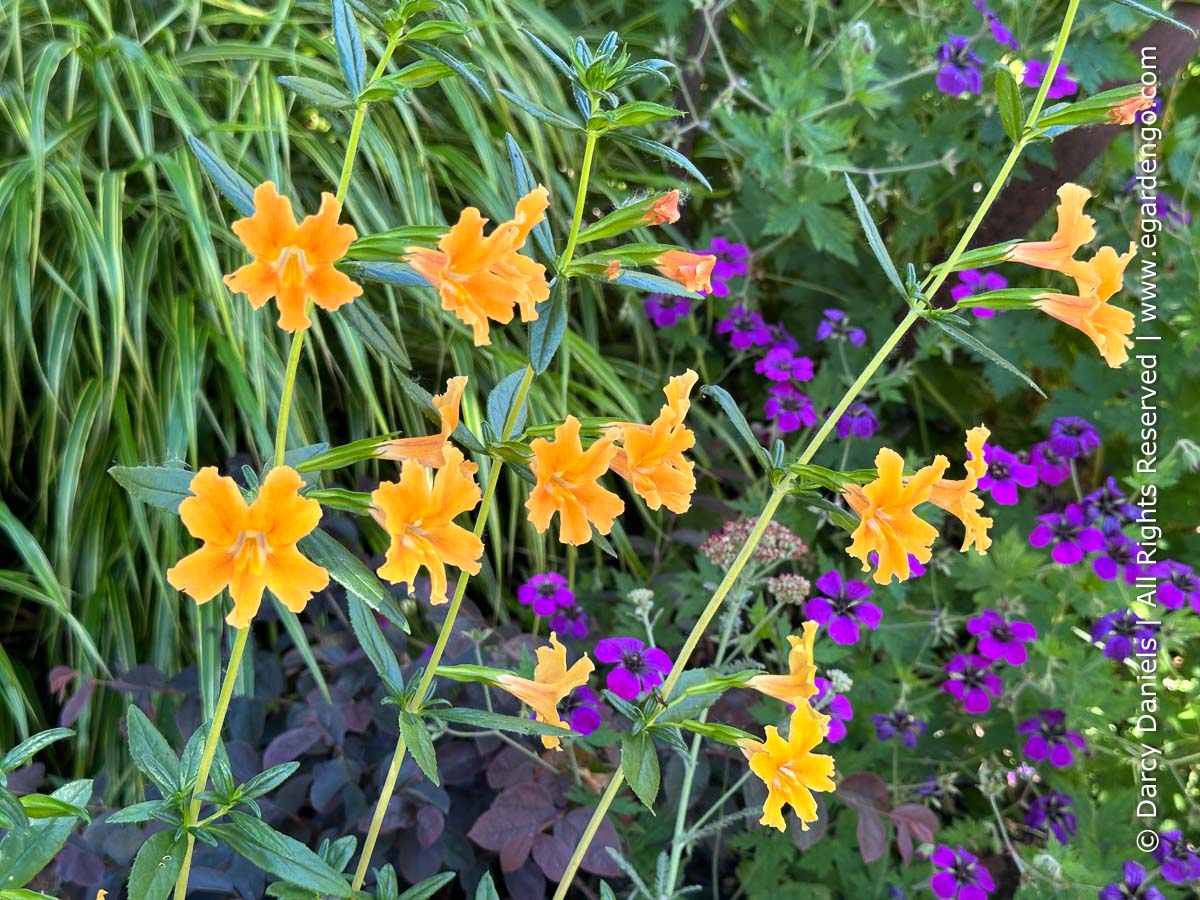
Suitable Substitutes

Diplacus 'Pamela' | Monkeyflower